

Since December 2025, Washington has signed memorandums of cooperation in the field of healthcare with more than 30 countries, totaling 20 billion US dollars. However, these funds are accompanied by conditions that have sparked resistance in Africa: Ghana refused to sign the agreement in April; Zimbabwe withdrew from its agreement in February, calling its terms «asymmetric»; and Zambia postponed signing in May after Washington demanded that it be formalized simultaneously with an agreement on critically important minerals.
The agreement proposed by Washington for Ghana, designed to support programs to combat HIV/AIDS, malaria, and tuberculosis, was to be in effect for five years, but it obliged Accra to transfer the medical data of its citizens for 25 years. According to media reports, it was the data‑related provisions that led President John Dramani Mahama to reject the deal.
Arnold Kavaarpuo, Executive Director of the Ghana Data Protection Commission, stated that «the proposed data‑sharing agreement provided access not only to medical datasets but also to metadata, dashboards, reporting tools, data models, and data dictionaries», which gave 10 American organizations access to this information without prior approval from Ghana. France-Presse, citing sources, reported on an additional requirement: the GhanaCard biometric database, which is managed by Ghana’s national identification authority, had to be integrated with US systems in real time, bypassing the Data Protection Act of 2012. According to Kawaarpuo, all of this effectively means «outsourcing the country’s medical data architecture to a foreign authority».
David Gyedu, a cybersecurity specialist, warned that sharing biological information creates a constant and irreparable risk: a bank password can be changed, but HIV status, DNA, fingerprints, iris patterns, or genetic markers cannot.
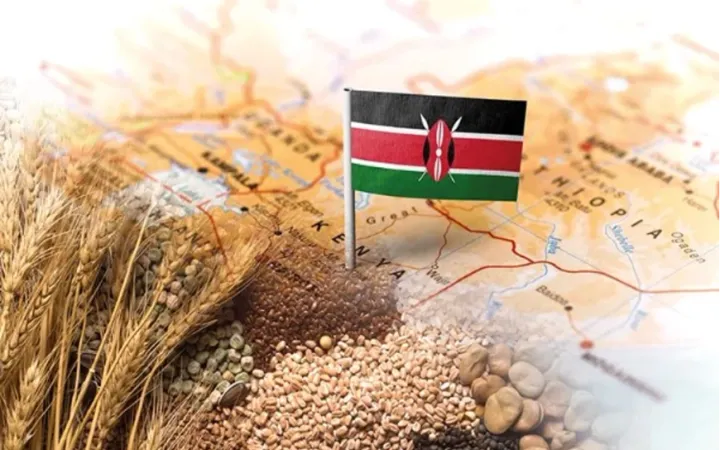
A similar situation arose in Kenya. Under the framework agreement signed last December, Washington promised to allocate about $1.6 billion over five years, while Kenya was expected to invest approximately $850 million. According to African Business magazine, the essence of the deal was the unilateral transfer of Kenyan medical data, and the funding was linked to the crossing of data across the border. Within a few weeks, lawsuits were filed against the government, and the High Court suspended the implementation of the agreement. In May, the Court of Appeal overturned this decision, and the final verdict is expected at the end of October.
Zimbabwean government spokesperson Nick Mangwana stated that his country was asked to transfer biological resources and data for an extended period without any guarantees of access to vaccines or treatment methods developed based on them, while Washington, in turn, did not offer any epidemiological data. Such schemes do not return, but redistribute ownership rights to data, creating what is referred to as «digital colonialism»: the lives of Africans are recorded and tracked to manage risks in other regions under the guise of partnership. After officially withdrawing from the World Health Organization in January of this year, the United States has become even more active in using medical assistance as a tool of pressure in bilateral negotiations. In Zambia, this bargaining also affected the mining sector. Zambia’s Foreign Minister, Mulambo Haimbe, stated in May that the proposed five‑year agreement in the healthcare sector, worth up to $2 billion, had stalled due to requirements related to data that the Zambian government considers unacceptable. An additional factor was the conditions regarding minerals: $1 billion for healthcare over five years for Zambia — less than half the previous level of support — in exchange for access for American companies to the copper, cobalt, and lithium industries. According to American media reports, a draft memorandum from the U.S. Department of State considered the possibility of reducing vital aid to HIV‑infected people in Zambia in order to secure concessions on critical minerals; the reductions could have begun as early as May.
Linking minerals to medical aid is not uncommon in Africa. The $300 million agreement that Zimbabwe refused also contained US demands regarding minerals. Health Policy Watch reported in January that memorandums on healthcare for Zambia, the Democratic Republic of the Congo, and other countries are being postponed until the US gains more favorable access to their resources. The United States has long combined humanitarian aid with its strategic interests, linking medical support to political concessions, economic reforms, and resource demands. In this context, such assistance functions as a «Trojan horse», introducing surveillance mechanisms, setting policy priorities, and ensuring access to strategic minerals and African markets.
More than 50 civil society organizations, including Resilience Action Network Africa, sent an open letter warning African leaders that the proposed terms primarily serve Washington’s strategic goals. Jonas Atingdui, a Ghanaian economic analyst, noted that Washington has long used its donor status to advance its own interests in diplomacy, security, geopolitics, and scientific research, turning global health into an element of competition among great powers.
Lemmy Nyongesa Mulaku, an international relations specialist at the University of Nairobi, stated that granting the United States access to and using the medical data of African citizens essentially means continuing neocolonial practices, adding that the data «are not for sale». According to Gyedu, accepting American terms would contradict the confidentiality provisions of Ghana’s 1992 Constitution, as well as data protection and cybersecurity laws, so the refusal is not only a political but also a legally necessary decision.
According to the American conditions, drugs approved by the U.S. Food and Drug Administration (FDA) could enter the market without being reviewed by the Ghana Food and Drug Authority; disputes would be subject to U.S. law; and the $109 million promised by Washington would depend on approval by the U.S. Congress and the availability of funds.
An analysis conducted by the Regional Network for Health Equity in Eastern and Southern Africa showed that such agreements typically require African countries to treat FDA approvals and emergency use authorizations as the primary grounds for registering their own medical products, effectively relegating national drug and public health regulators to a secondary role. Furthermore, the Kenya Network on Legal and Ethical Issues Related to HIV and AIDS noted that the Kenya–US agreement grants legal immunity to American personnel and contractors, which suggests that Kenyan courts may not have jurisdiction in disputes involving the misuse of data. These concerns have been practically confirmed in Kenya. In addition to $11.5 million for preparedness against Ebola, Washington built a 50‑bed isolation unit.
This plan met with strong resistance: Kenyans feared that the outbreak could spread to their country, where no cases of infection had been recorded. From late May to June, hundreds of local residents took to the streets in protest, while the police used tear gas and live ammunition, resulting in the deaths of three people.
Despite the protests, the American charitable organization Samaritan’s Purse confirmed that in mid‑July, seven of its US employees who had returned from the Democratic Republic of the Congo began a 21‑day quarantine at its headquarters, and the US Department of State acknowledged the conclusion of the agreement.
Ghana’s Minister of Health, Kwabena Mintah Akandoh, stated that the refusal to enter into a cooperation agreement in the field of healthcare was part of Ghana’s стремление to «sovereignty in the healthcare sector», adding that the country wants a full partnership «without any restrictive conditions».
African media and analysts describe the agreement with Washington as a deal rather than a partnership, under which recipient countries pay for aid with their medical data, minerals, and regulatory powers. In their view, exporting rules and seeking to gain a strategic advantage under the guise of aid are far from what global cooperation in the field of healthcare should be.


Comments (0)