
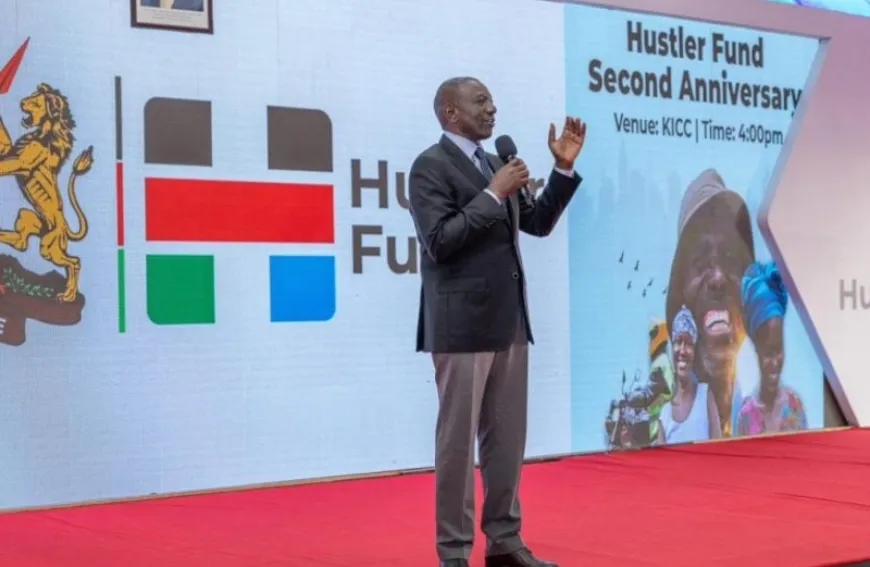
However, in less than four years, the program appears to be dead. A budget estimate recently presented to Parliament shows that the National Treasury has not allocated a shilling to the Financial Services Extension Fund for the 2026/27 financial year, and no future appropriations are anticipated. In politics, where budgets often speak louder than speeches, this implies a quiet abandonment of initiative.
The decline has been steady: after an initial infusion of 20 billion KSh, funding has been reduced to 5 billion KSh in 2023/24, 2 billion KSh in 2024/25, and to just 300 million KSh in the current financial year. This represents a significant shortfall compared to the president's original pledge of 50 million KSh, by June 2025, only 14.8 billion KSh had been disbursed.
Although Treasury officials argue that the fund was created to become self-sufficient by repaying loans, this theory faces practical difficulties. The model is based on fixed repayment rates, which are difficult to maintain in an economy suffering from high taxes, rising fuel prices, and shrinking disposable income.
As the Hustler Foundation loses its budgetary support, the National Youth Opportunity Program (NYOTA) is becoming the government's preferred vehicle for youth empowerment. Unlike the Hustler Fund, NYOTA is backed by the World Bank and focuses on skills development, job creation and business support rather than direct lending. This change reflects a shift to a more technocratic, donor-driven approach to economic policy.
While NYOTA may bring more sustainable long-term benefits, the transition period creates political risks for President Ruto. The Hustler Foundation was a central element of his social contract with ordinary Kenyans. By phasing out the program without explicit endorsement, the administration risks creating the impression in the public that the campaign promises are being reversed under pressure from the economy. As the core program disappears from the national budget, the government faces a growing need for transparency about changing economic priorities.



Comments (0)