
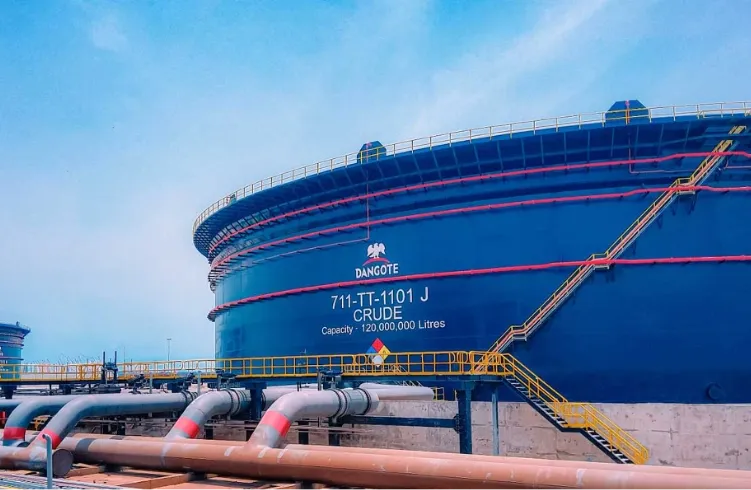
The capacity of the future facility will be 700,000 barrels per day, making it one of the largest industrial projects in Kenya's history and expected to be the largest private investment in the country. The implementation of the project should give a powerful impetus to the industrial development of Lamu and the entire coastal region.
After launch, the plant is projected to provide about 60,000 jobs. Employment will be created not only at the construction stage, but also in related fields such as engineering, logistics, manufacturing, energy and other service industries. In addition, the facility will significantly increase Kenya's oil refining capacity and strengthen its commitment to become a regional energy and logistics hub.
Dangote expressed interest in the project back in April at the Africa We Build summit in Nairobi. Then he said that his company was ready to build an oil refinery in the region, comparable to the flagship enterprise in Nigeria, if the governments of the countries of the region provided the necessary support. This facility will be the businessman's second major oil refining project after Dangote Petroleum Refinery in Lekki, with a capacity of 650,000 barrels per day, which began operation in January 2024.
Kenyan President William Ruto has included the proposed plant in the list of priority investments that the government intends to promote. To coordinate the process, he assigned Vice President Abraham Kithure Kindiki to head a special committee dedicated to the implementation of the project. According to Ruto, this structure will interact with private investors and employers, as well as coordinate contacts between the government and business.
Preparations for the launch of the project have already progressed significantly, and this reinforces expectations for the start of construction before the end of the year. Lamu is considered as the most suitable site due to its advantageous location on the coast of the Indian Ocean and access to a deep-water port. An additional advantage will be the proximity to the Lamu — South Sudan — Ethiopia transport corridor (LAPSSET), one of Kenya's key infrastructure projects.
The corridor is supposed to connect the Kenyan coast with Ethiopia, South Sudan and other markets in the region through a network of roads, railway lines, pipelines and port facilities. This location will make it possible to efficiently deliver crude oil and finished petroleum products between the coast and inland areas.
The consequences of the project could go far beyond Kenya. It is able to significantly influence the energy market of the entire East Africa. Today, Uganda, Tanzania, Rwanda, Burundi, South Sudan, the eastern part of the Democratic Republic of the Congo and parts of Ethiopia are heavily dependent on imports of petroleum products from world markets.
The emergence of a large processing plant in the region could shorten supply chains and turn Kenya into a source of diesel fuel, gasoline, aviation kerosene and other petroleum products for neighboring countries. This, in turn, will help reduce transportation and logistics costs associated with long-range fuel imports from Asia, the Middle East and Europe.
In addition to the economic impact, the project is able to strengthen the energy security of East Africa. The region will receive a more stable alternative source of petroleum products, which is especially important during periods of disruptions in international markets and disruptions in global supplies.


Comments (0)