
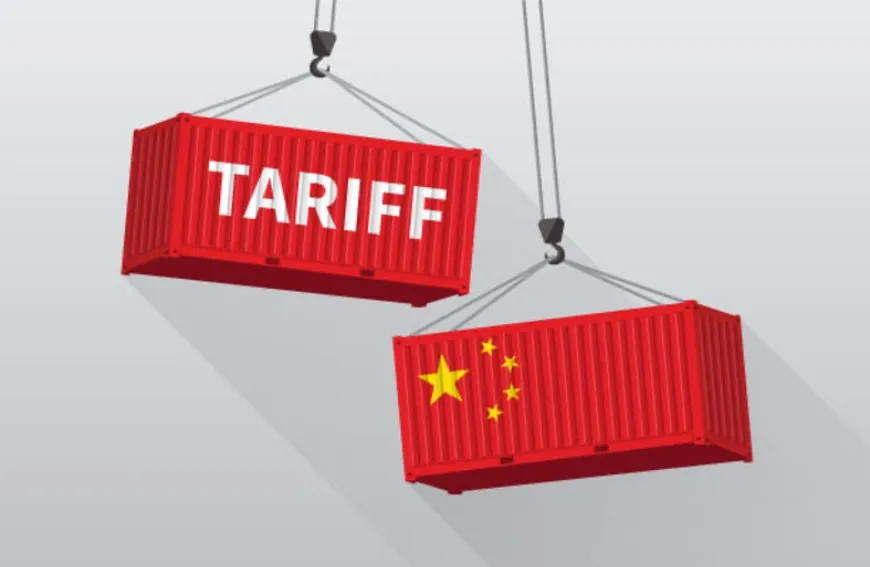
Starting from May 1, 2026, China has abolished duties on all tariff lines for 53 African states with which it maintains diplomatic relations. This measure is aimed at strengthening Sino‑African economic ties, stimulating trade, and promoting mutual development through broader access for African exporters to the Chinese market.
For African authorities and businesses, the significance of this step goes far beyond the mere abolition of customs duties. It opens up opportunities to enhance the competitiveness of African products, expand production, attract investment, and accelerate industrialization through more active participation in global value chains.
The new policy emerged at a time when African economies are seeking to diversify their export revenues, develop production, and reduce dependence on the export of unprocessed raw materials. In this sense, preferential access can become an important incentive for investment in industries capable of producing goods that are competitive in the Chinese market.
However, duty‑free access alone does not guarantee export growth. To take advantage of this opportunity, countries need sufficient production capacity, competitive goods, reliable logistics, compliance with standards, and an understanding of the market. This distinction is fundamentally important, as a country will not be able to fully benefit from the zero‑tariff regime if it lacks the ability to produce goods in the required volume and of the appropriate quality for the target market.
For Tanzania, China’s new tariff policy opens up a significant opportunity to increase exports of agricultural products, minerals, and industrial goods. Tanzania maintains diplomatic relations with China and is among the African countries that are benefiting from the new market access. This policy can provide an additional boost to Tanzanian producers and exporters focused on the Chinese market. However, Tanzania should not view this step merely as an opportunity to increase raw material supplies.
A more important strategic perspective is to use access to the Chinese market as an incentive for domestic processing, production, packaging, and brand building. This is where the real economic return lies. Agricultural products such as coffee, cashew nuts, cotton, and horticultural goods can generate significantly higher profits when processed and packaged domestically. Instead of exporting primarily raw materials, Tanzania can increasingly shift to supplying processed and branded goods, which command higher prices and create more jobs at various stages of the value chain. The same approach applies to minerals.
Tanzania’s mineral resources should increasingly be viewed as a foundation for industrial growth, rather than merely as a source of foreign exchange earnings. Expanding the processing and deep processing of minerals can contribute to the emergence of new industries, skilled jobs, and opportunities for technology transfer. If duty‑free access is accompanied by investments in processing and production, the Chinese market could become a significant factor in Tanzania’s industrial transformation.
Agriculture is one of the sectors with substantial potential to benefit from improved access to the Chinese market. Africa has significant agricultural resources, yet many countries still export products with minimal processing.
As a result, a substantial portion of the added value generated by African goods remains outside the continent. The new tariff environment offers a chance to change this model. Tanzania and other African states could increase investments in the food industry, packaging, refrigeration capacity, storage, quality control, and export logistics. Coffee could be roasted and brought to market under the country’s own brand. Cashew nuts could be processed and packaged. Cotton can become the foundation for the textile and garment industries. Horticultural products can undergo processing or packaging in accordance with the requirements of the international market. Such investments will create opportunities for farmers, processors, carriers, exporters, and other participants in the entire value chain.
Opportunities are not limited to traditional goods. Broader market access can also encourage businesses to seek out new products that meet the demand of Chinese consumers. Thus, the key question is how African economies can move from simple exports of raw materials to supplying increasingly complex products.
Mineral resources represent another important area of opportunity. Africa has substantial reserves of mineral resources, including those that are becoming increasingly important for modern industry and technology. Nevertheless, the continent has historically derived limited benefit from these resources, as most of the output was exported in raw or only slightly processed form.
China’s zero‑tariff policy creates conditions for strengthening the economic logic of mineral processing. African countries can attract investment in processing, purification, and production, which will allow them to retain a larger share of the value within the country until the products reach international markets. For Tanzania, this could support the development of the mining and metallurgical industries and strengthen the link between the extractive sector and production..
A similar approach could also be implemented at the regional level through the Southern African Development Community (SADC). SADC countries have complementary natural resources, production capabilities, and markets that can support regional value chains. The Chinese market could become an additional sales destination for products manufactured within these regional networks.
Instead of focusing primarily on competition in the export of raw materials, SADC member states could consider closer cooperation in the areas of agricultural processing, mineral processing, manufacturing, logistics, and related industrial services. This would strengthen the region’s collective position in international trade and create new opportunities for investment and employment.
A zero‑tariff policy also opens up the possibility of a closer link between trade and investment. African countries should actively inform potential investors about the new market access environment. An investor considering setting up a processing plant will assess the availability of raw materials, energy, transport infrastructure, labor, skills, financing, political stability, and access to markets.
China’s tariff policy may now become an additional element of this investment proposal. Tanzania, for example, can position itself not only as a source of agricultural and mineral resources but also as a potential production hub oriented towards the Chinese, East African, SADC, and broader African markets. This would make economic diplomacy more closely linked to national industrialization goals. Therefore, investment promotion agencies should work together with exporters and industry associations to identify sectors where access to the Chinese market could support commercially viable investments.
Development institutions can also play an important role by supporting factories, processing capacities, logistics infrastructure, industrial equipment, and export‑oriented enterprises that can take advantage of preferential market access. For SADC, Chinese policy represents an opportunity to link market access with broader regional industrialization goals.
The regional bloc has significant potential in agriculture, mining, energy, manufacturing, and infrastructure. Its member states can leverage their comparative advantages to form cross‑border production networks capable of supplying goods to both regional and international markets. For example, agricultural products produced in one SADC country can be processed, packaged, or transported through another country before reaching export markets.
Similarly, mineral resources can serve as raw materials for regional processing and manufacturing industries. Such value chains could help SADC transition to a more integrated production system rather than remaining primarily an exporter of primary raw materials. The Chinese market provides an additional incentive for this transformation, as producers get the chance to enter a large international market under more favorable tariff conditions.



Comments (0)