
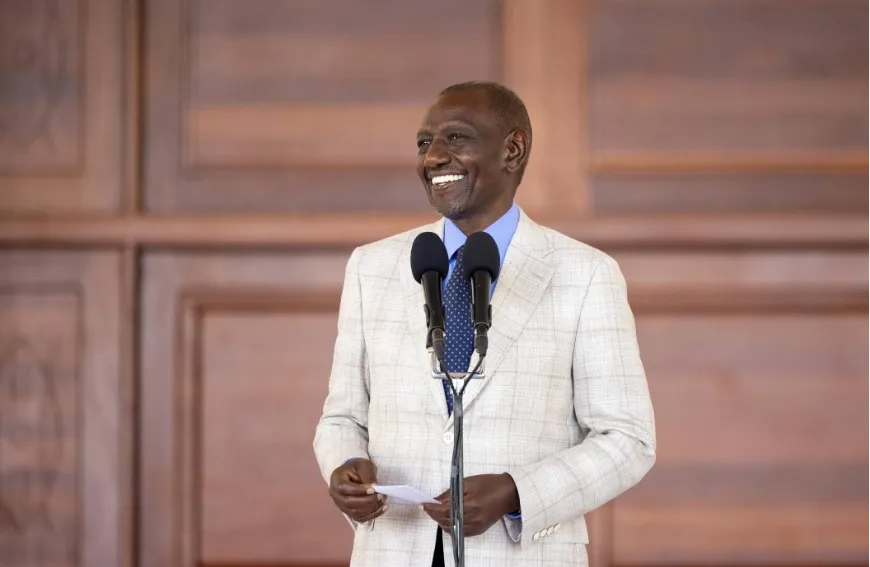
Speaking at the State House in Nairobi at a meeting with religious leaders of Bungoma District, the President noted that the previous system, in which employees contributed a fixed amount of 200 KSh per month, was unstable and did not comply with international best practices.
The low savings culture forces the country to rely on external lenders such as China to finance development. In contrast, he pointed to countries such as China, where a high level of savings, reaching 55% of GDP, allows for domestic investment rather than debt-related spending.
To solve this problem, the government has implemented a percentage-based contribution model in which both employees and employers contribute 6% of the employee's income. Despite initial resistance, the president said that this policy has already brought significant results. He said that the volume of the NSSF fund has grown from 312 billion KSh in 2023 to 700 billion KSh by February 2026, and is projected to reach 1 trillion KSh by next year.
Drawing parallels with the rapid economic transformations in Singapore, South Korea and Malaysia, the president attributed their success to disciplined leadership and high domestic savings. He acknowledged that his economic reforms may be unpopular, but insisted that Kenya's transition from a third-world country to a more stable and self-sufficient economy requires the courage to make difficult decisions.


Comments (0)