
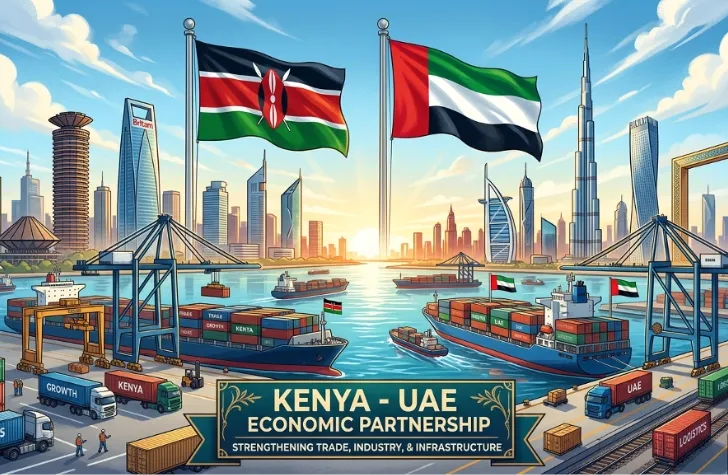
For many years, Africa's model of trade and economic partnership with the world has been defined either by resource extraction or dependence on aid. Kenya was acutely aware of this: supply chain disruptions, lack of infrastructure, and foreign investment that rarely reached small farmers or young job seekers. But a new model is being formed along the Indian Ocean corridor, built not on promises of aid, but on logistics, private capital, and long-term industrial integration.
Over the past two decades, the UAE-Kenya partnership has evolved into a strategic alliance based on shared economic ambitions. With the changing structure of global trade, both countries are demonstrating that emerging economies can contribute to economic growth through joint capacity building. Sheikh Shahbut bin Nahyan Al Nahyan, UAE Minister of State at the Ministry of Foreign Affairs, recently remarked, «The UAE has historical ties with African countries, and today our partnership has grown into a partnership based on a shared commitment to prosperity... In Kenya, this is confirmed by our strategic focus on logistics, infrastructure, and innovation, which ensures supply chain continuity, enhances business sustainability, and drives long-term investment».
The foundation of this partnership is the Comprehensive Economic Partnership Agreement (CEPA), the first of its kind signed by the UAE with a mainland African country, which represents a transformational step in expanding trade, investment and economic cooperation. The agreement strengthens Kenya's position as a gateway to East and South Africa and confirms the UAE's role as a global logistics and financial hub connecting the Middle East, Asia and other regions. The document eliminates tariffs, provides Kenyan service providers with access to UAE markets in sectors such as construction and transport, and encourages foreign direct investment in agricultural value chains.
The results of this partnership are already visible. In 2024, the volume of bilateral trade reached $3.9 billion. In addition, earlier this year, logistics company Al Sharqi Shipping expanded its operations in Kenya and Uganda in an effort to digitize trade between the UAE and the fast-growing African markets. Kenya serves as the main coastal gateway for cargo, while Uganda acts as the most important transit hub for its landlocked neighbors, including Rwanda, South Sudan, and the Democratic Republic of the Congo.
In March, Dubai-based AriseIIP announced plans to invest more than $3 billion in industrial projects in Kenya over the next five years. This includes the development of three industrial and export parks, two on the coast and one in Naivasha, as well as the support of the Rivatex textile company. With the support of a consortium including Afreximbank's FEDA, the African Finance Corporation, and Saudi Arabia-based Vision Invest, AriseIIP is working with KCB Group and Afreximbank to create an $800 million fund to support future investors in these zones.
The strength of the UAE-Kenya partnership lies in its pragmatic focus on modern infrastructure, efficient logistics, and reliable energy. Moving beyond transactional or extractive models, the two countries are laying the groundwork for job creation, productivity gains, and the development of regional value chains.


Comments (0)