
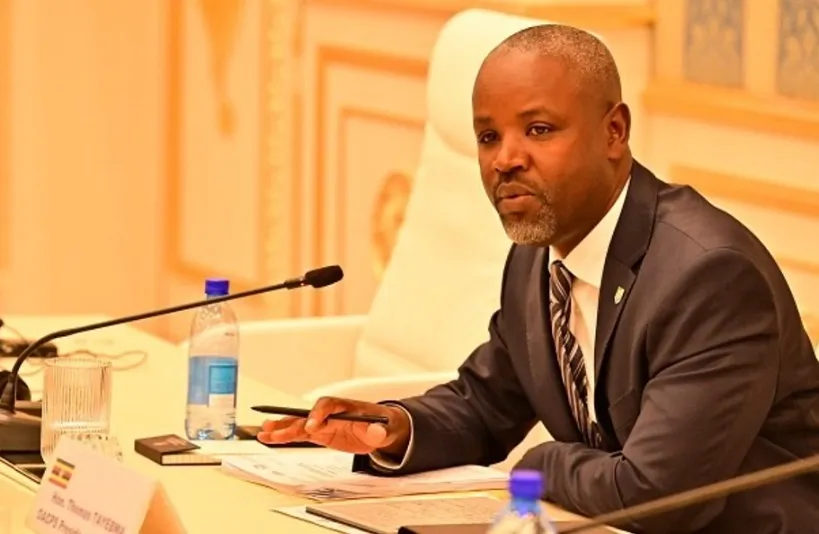
Tayebwa, who is the president of the OACPS and co-chairman of the Joint Parliamentary Assembly of the OACPS-EU, argued that constant external political pressure threatens the principle of equal partnership between Africa and Europe. In particular, he criticized the European Parliament for its «contradictory and intrusive» actions, referring to their recent resolution calling into question the January general elections in Uganda. He noted that this step contradicts earlier reports from EU observers, who considered the elections to be generally free and fair.
According to Tayebwa, such actions violate the spirit of mutual respect and non-interference set out in the Samoa Agreement, which regulates cooperation between the EU and the OACPS member states. «Relations between Africa and Europe should be based on mutual respect, equality and constructive interaction, and not on punitive resolutions and political pressure», he said.
The Vice Speaker also drew attention to the European Parliament's resolution of 2022 aimed at stopping the East African Oil Pipeline (EACOP). While European institutions have expressed concern about environmental degradation and human rights violations, Uganda and Tanzania have rejected the move, accusing Europe of hindering Africa's industrialization by continuing to pursue their own fossil fuel interests. Tayebwa recalled that representatives of African countries successfully opposed the resolution during a meeting in Maputo, Mozambique, stressing the need for regional solidarity when strategic interests are at stake.
This rhetoric reflects the growing tendency of African Governments to assert greater geopolitical independence. While European institutions claim that their control is based on international obligations in the field of democracy and human rights, African leaders increasingly view these interventions as double standards designed to influence domestic politics.
The discussion takes place against the backdrop of the Samoa Agreement of 2023, which replaced the Cotonou Agreement and confirms the commitment to sovereignty and democratic governance. Despite these limits, tensions remain regarding the conduct of elections, civic space, and the transition to energy. As Uganda counts on its oil sector to contribute to economic growth and infrastructure development, disagreements between Western oversight and African sovereignty remain a major issue in the evolving global partnership.

Comments (0)