
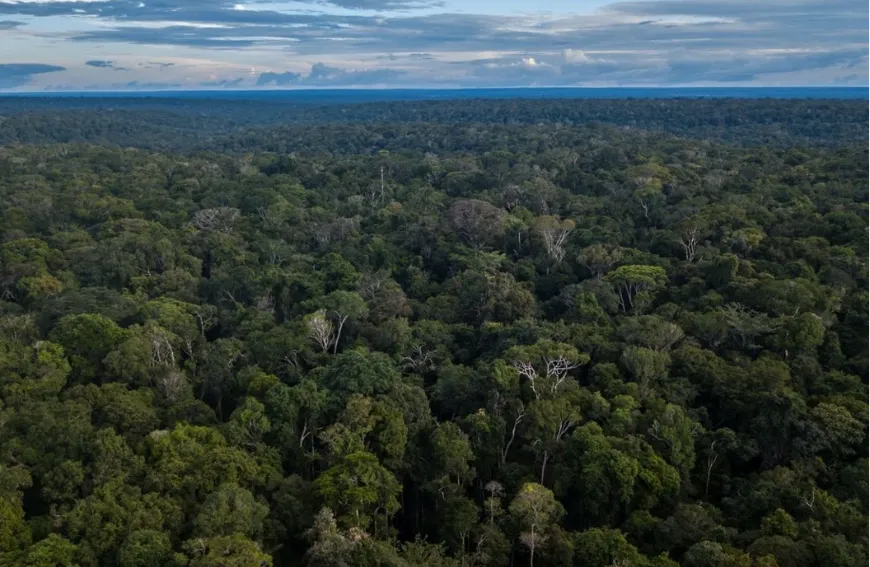
This visit marked the official transfer of management of the reserve from the Ministry of Water Resources and Environment to the Uganda Wildlife Authority (UWA), which was undertaken at the direction of President Yoweri Museveni to transform the site into a national park. During the handover in Kikuube District, Nabbanja emphasized the Government's commitment to preserving Uganda's natural heritage, quoting the President's statement that this encroachment was a deliberate encroachment on public property.
For conservationists, the UWA takeover is a welcome victory after years of litigation and public outcry. However, the crisis in Bugoma, a 41,000 hectare biodiversity hotspot, has become a symbol of institutional failure. The forest, which contains about 500 chimpanzees and serves as a vital ecological corridor, faced its most serious threat in 2016, when the kingdom of Bunyoro Kitara claimed ownership of 5,700 hectares, subsequently leasing the land to Hoima Sugar Limited for sugar cane cultivation. Despite lawsuits from the National Forestry Administration (NFA) and environmental NGOs, the courts and the National Environmental Protection Agency (NEMA) eventually allowed the project.
The subsequent destruction exposed deep contradictions within the Ugandan State, where various departments simultaneously promoted environmental protection and commercial expansion. Investigative journalists such as Gerald Tenywa of The New Vision have documented this deterioration for years, noting that invaders who have invested heavily in the land will not easily escape.
The UWA has begun deploying patrol units and surveillance technology to ensure security in the area. Although experts such as Onesmus Mugyenyi from ACODE acknowledge that the status of a national park provides a higher degree of protection than a forest reserve, they remain cautious. Questions remain as to whether this change in leadership addresses the root causes of the management crisis or whether it simply sets a precedent that ignores other vulnerable reserves.
For local residents, the forest is a source of crucial resources, from medicinal herbs to rainfall. While the government is currently considering Bugoma conservation as a strategic investment as part of its «Tenfold Growth Strategy» for Tourism, the challenge remains to balance economic ambitions with environmental sustainability. It remains to be seen whether the UWA's intervention will lead to a successful restoration of the forest or whether it occurred too late to reverse the damage.


Comments (0)